
Menu

If a do-it-yourself approach to your taxes doesn’t feel appealing or you just think you want the reassurance that comes with some extra help, you’ll want to know where to look. And it’s important to understand that, though there are many people out there who claim to be able to help you with your taxes, you don’t want to work with just anyone.
Tax rules change often, and even minor updates can affect credits, deductions, and reporting rules for the 2025 tax year. Someone who is not trained or who hasn’t kept up with recent changes may miss income, misapply credits, or file forms incorrectly. That can lead to delays, IRS letters, or the need to amend a return later. In some cases, mistakes can also affect future filings. Working with a qualified tax preparer who follows current IRS guidance helps reduce those risks and gives you clearer answers when questions come up.
Once you decide to seek help, it helps to understand the different types of tax prep services available.
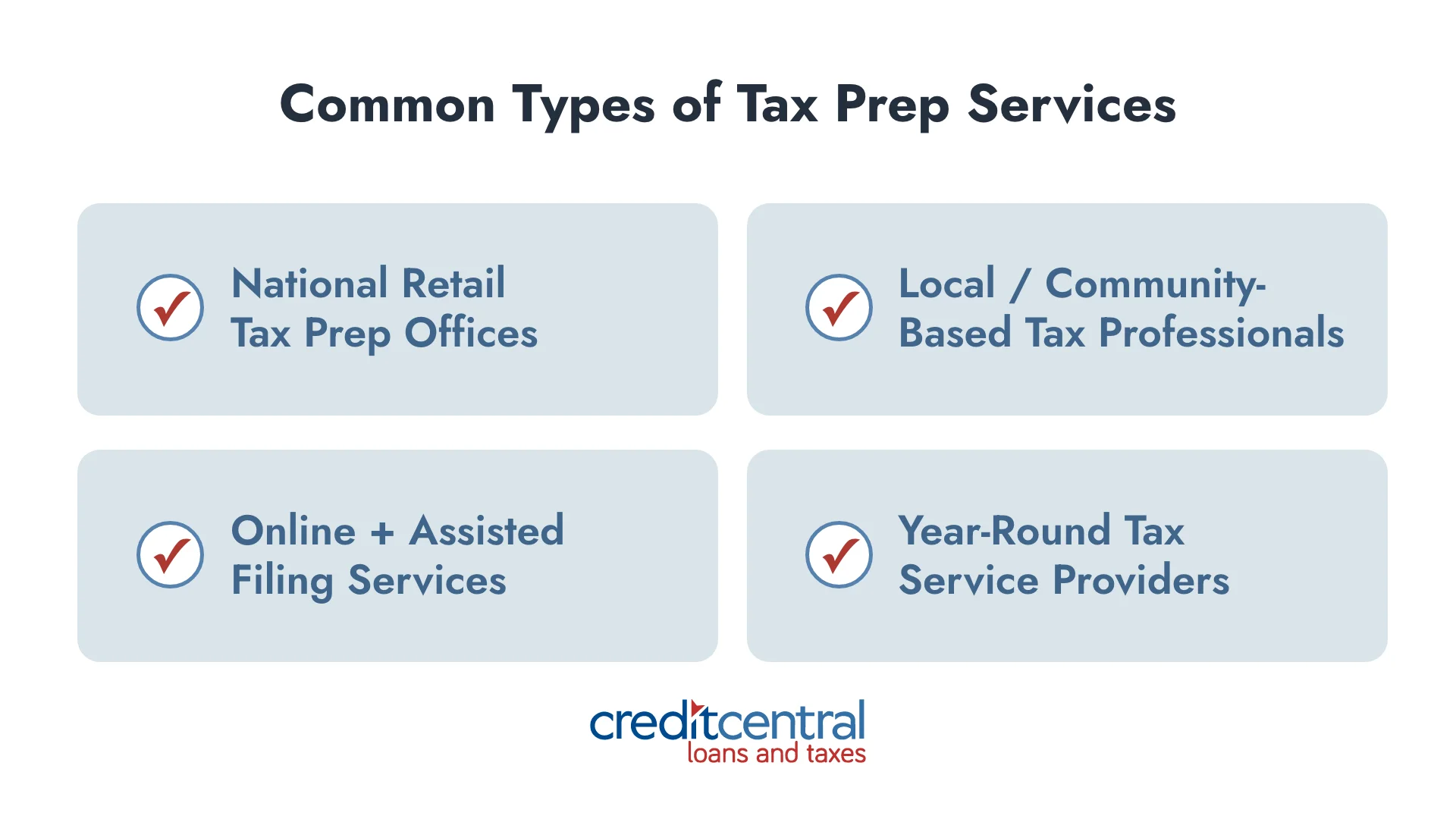
Here are some of the most common types of tax prep services for you to consider.
These offices are often located in shopping centers and operate heavily during tax season. They usually follow standardized processes and pricing. Many work well for basic returns and offer extended hours during busy months. The experience may vary depending on the individual preparer assigned to you.
Local tax professionals often work with the same clients year after year, which helps build familiarity over time. They tend to understand local jobs, industries, and common filing scenarios. This option can feel more comfortable if your taxes change from year to year or if you like having someone you can call when questions come up.
Online platforms let you enter your information from home, with the option to reach out for help if you get stuck. They work well for people who are comfortable using software but still want answers to specific questions along the way. Since support can range from basic chat help to one-on-one assistance, it’s worth checking what’s included before you get started.
These providers offer support beyond tax season. They may help with planning, prior-year filings, or IRS letters throughout the year. This option can be helpful if your income or household situation changes often or if you want continued access to advice instead of seasonal support only.
Choosing a tax prep option is not just about price or convenience. It’s also about how you prefer to communicate, how complex your return may be, and what kind of support you want after your taxes are filed. Some people like sitting down face-to-face with a preparer. Others prefer uploading documents from home.
Timing matters too. If questions come up later in the year, not all services will still be available. Understanding these differences ahead of time can help you pick a tax prep option that fits your comfort level and expectations for the 2026 filing season.


Credit Central provides tax preparation services designed to meet people where they are, whether filing feels familiar or overwhelming. One helpful option is a free estimate, which gives you a clearer picture of a potential refund before moving forward. When you are due a refund, there are no upfront fees for tax preparation. Instead, you can choose to have the preparation cost deducted directly from your refund after the IRS processes your return.
For those who want access to funds sooner, Credit Central also offers tax refund advances up to $7,500, based on eligibility. This option allows qualified filers to receive part of their expected refund before the tax season wait is over.
Getting started is easy. Use the tax branch locator on the Credit Central website to find the nearest location and schedule a time with a local team member who can walk you through the next steps.


